
Freelancing in Egypt: The Practical Guide to Getting Started, Taxes, and Getting Paid.

Around 850,000 Egyptians already earn a living as digital freelancers, and that number continues to grow each year. More Egyptians are going freelance than ever before, and it isn't hard to see why. A laptop and a steady internet connection now open the door to clients in Dubai, London, Berlin, or New York, all from a desk in Cairo or Alexandria. The flexibility is real, and so is the earning potential.
If you’ve been wondering how to start freelancing in Egypt, this guide walks you through the whole journey, from picking what service to offer to taxes, with a proper look at the part that catches almost everyone off guard: actually getting paid.
Why freelancing is growing in Egypt
We've heard the statistics, but it helps to know what's behind them. A few things are driving the shift. Egypt has a young, highly online population and a growing tech scene, much of it centred on Cairo. The time zone sits neatly between Europe and the Gulf, so a normal workday here overlaps with clients on both sides. Add strong English and Arabic, plus a cost base well below Dubai or London, and Egyptian freelancers are genuinely competitive for international work rather than just cheaper.
The catch is that international work means international money, and that's where the day-to-day reality of freelancing lives or dies. We'll get there. First, the groundwork.
What you need to get started
Before you build a profile or send a single pitch, you need to get two things straight: what you sell and who buys it. Everything after this, from your pricing to your portfolio, hangs off those two answers, so you should be really specific.
General titles, such as "content writer" and "designer," are largely invisible. There are thousands of each on every platform, and a client skimming profiles has no real reason to pick you over the next one. But the moment you say "I write landing pages for B2B SaaS companies" or "I localise fintech content from English to Arabic," you start to sound like the exact person for one specific job, and that is precisely how you get hired.
You don't have to guess your niche, either. Open Upwork or Fiverr, read a dozen recent briefs in your field, and pay attention to what clients keep asking for and where they sound fed up, because that frustration is your opening.
Once you've spotted it, write a single honest page covering what you offer and what it costs, and let that page do the heavy lifting as your pitch and your profile summary.
🔗ICYMI: We wrote a blog on how to pitch to brands as a content creator. You’re welcome 😉
Land your first clients
The first handful of clients are always the hardest, so it helps to treat finding them as a habit rather than something you do only when the mood strikes. Start on the marketplaces and build a small portfolio with sample projects because that's how you get past the awkward stage where nobody wants to be the first to trust you.
At the same time, make yourself visible in the LinkedIn and Facebook groups where founders and operators actually spend their days, and reach out directly to a set number of them each week, leading with a specific idea or a short audit rather than a vague "I'm available.”
While all that outreach ticks along in the background, keep publishing proof of what you can do. Two or three short case studies, each one walking through a problem you solved and the result you got, will win a stranger over far quicker than a tidy list of skills ever could.
🔗If you'd like a proper head start, we've put together a freelancer toolkit with pretty much everything you need to build a successful freelance career.
Register with the Tax Authority and get your Tax Card
This is the part almost everyone wants to skip, and that’s understandable. The trouble is that skipping it doesn't make it go away; it just means the paperwork waits for you, usually turning up as a letter from the tax office at the least convenient moment imaginable.
- Begin with registration. You can freelance under your own name as a self-employed person, or set up a sole proprietorship or one-person company in Egypt. Whichever route you take, you must register your activity with the Egyptian Tax Authority (ETA) and obtain a Tax Card, which carries your tax number.
- Next comes e-invoicing. Egypt runs an electronic invoicing and receipts system. If you bill businesses or are VAT-registered, you're already part of it. Sign up on the ETA portal, collect your credentials, and add a digital signature if they ask for one. Don't be tempted to wave this off as busywork, because your client can't reclaim VAT without a proper e-invoice, which means a missing one can end up holding up your own payment.
On VAT itself, the standard rate is 14 per cent, and you register once your taxable turnover crosses EGP 500,000 in any twelve-month stretch. Some professional services are expected to register from day one; regardless, it's worth checking where yours sits before you assume you're under the line.
Income tax is progressive, and you file for the previous calendar year by 31 March. As things stand, the brackets look like this:
- 0 per cent up to EGP 40,000
- 10 per cent up to EGP 55,000
- 15 per cent up to EGP 70,000
- 20 per cent up to EGP 200,000
- 22.5 per cent up to EGP 400,000
- 25 per cent up to EGP 1.2 million
- 27.5 per cent above EGP 1.2 million
Because rates and thresholds have a habit of shifting, confirm the current numbers with the ETA or a good accountant before you file, and take all of this as general guidance rather than tax advice.
Get Paid Easily as a Freelancer in Egypt
For local clients, an EGP transfer is fine. The trouble starts with money from abroad. A SWIFT wire is safe but slow, and it leaks, with intermediary banks taking a hidden cut and your own bank converting at its own rate, on its own day.
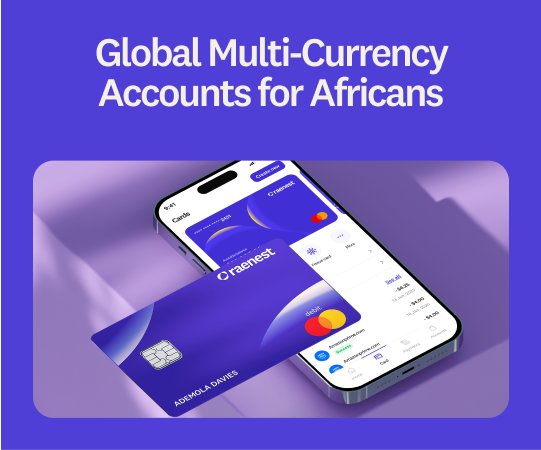
None of them are villains; they just weren't built to save money for someone getting paid across borders every week, and the small deductions add up to an annoying number at the end of it all. What you want is an account that works like a local one for your clients while staying a comfortable home base for your money, and that's what a Raenest multi-currency account does.
You get real account details in USD, GBP, and EUR, so a client in New York or Berlin pays you the way they'd pay any local supplier. The money then lands in that currency, so you can hold it in dollars during a weak pound, or convert to Egyptian pounds at a competitive rate and withdraw when it suits you.
Here's how Raenest helps you:
- Youn can receive USD, GBP and EUR with Raenest. Clients in the US, UK, and EU pay into local account details in their own currency.
- Upwork payouts reach you in under 60 minutes with Raenest FastTrack, rather than the usual multi-day wait.
- You hold in USD, GBP, or EUR and convert at your own time, not the bank's.
- You can send money to more than 70 countries whenever you need to cover a tool or pay a subcontractor.
Create your free Raenest account today and let getting paid be the simplest thing about freelancing.
Frequently asked questions
- At what point does VAT registration apply?
Once your taxable turnover reaches EGP 500,000 over twelve months, or straight away if you provide a professional service that requires early registration. An accountant can quickly tell you which applies to you.
- When is the Egyptian annual tax return due?
Individuals file for the previous calendar year by 31 March.
- Can I get paid in USD, GBP, or EUR from Egypt?
Yes. A Raenest multi-currency account gives you dedicated USD, GBP, and EUR account details to share with clients, along with stablecoin support, and you can convert to Egyptian pounds and withdraw locally whenever you choose.
- What is the cheapest way to receive international payments in Egypt?
For regular income, a multi-currency account usually comes out cheapest, because clients pay into local-style account details and you skip the intermediary fees that make SWIFT wires so expensive. For the odd one-off, a standard transfer service can work fine, but the per-transfer cost mounts up quickly once you're being paid often.