
How to Build a Personal Brand That Attracts Clients: 5 Practical Steps

Somewhere between sending the hundredth cold pitch and refreshing an inbox, hoping to get a positive response, most people come to the same realisation. Chasing work can be exhausting, and the truth is, the people who seem to never run out of clients are usually the ones whose names keep coming up in rooms they were never in. A mention in a Slack group, maybe. A tag under a LinkedIn post. A casual "you should talk to her, she does this kind of thing" dropped into someone else's conversation. And by the time the person hears about it, the introduction has already happened. That, really, is what a personal brand does. It carries your name into places you would never have reached on your own.
A personal brand is the reputation that travels ahead of you, shaped by what you consistently show the people watching your work. When built well, it attracts clients through referrals, search, and recognition.
We recently shared a blog on how to pitch yourself to clients, and in this guide, we will bring it home by showing you how to build a personal brand that attracts clients.
Step one: Anchor to a problem you want to be known for solving
Most personal brands fall apart at the foundation because they try to communicate everything at once. A designer who also writes, consults on strategy, dabbles in coaching, and occasionally posts about productivity ends up being remembered for none of those things. The mind is a lazy filing cabinet. It only keeps you in the drawer where it can find you again.
The clearest personal brands begin with a single, specific problem the person solves or provides services for. A job title or niche on its own rarely sticks. A problem does. A copywriter who helps SaaS founders translate complicated products into language buyers actually understand is far easier to recommend than one who simply writes well. A virtual assistant who keeps solo consultants from drowning in admin during launch weeks is easier to recommend than one who lists ten services on their LinkedIn page. The first description includes a use case. The second is a skill floating in the air with nowhere to land.
This matters even more for anyone working with international clients, whether they're freelancing or creating global content. A potential client in New York or London skimming your profile on Upwork, LinkedIn, or your personal site is making a quick judgment about whether you understand their world. A specific problem statement signals that you do. A vague list of services signals that you might, but they would have to do the work of figuring it out, which most clients will not.
When you anchor yourself to a problem, every piece of content, every conversation, and every project becomes evidence that you understand it deeply. Over time, you stop being one of many options and start becoming the person someone thinks of the moment that problem appears in their life.
Step two: Create a “you-specific” solution to that problem
There’s a reason two people with the same expertise can produce wildly different results when they execute a problem, and that’s because perspective varies. This means a remarkable mental angle is important for building a personal brand. In concise terms, expertise gets you taken seriously. A point of view gets you remembered. Without one, your content reads like a textbook that anyone could have written, and textbooks rarely build careers.
A point of view is the way you see the field that is genuinely yours. It’s the belief you keep returning to, the thing you would defend in a meeting, the take that makes someone pause mid-scroll because they had not thought about it that way before. It does not need to be controversial. It just needs to be honest and specific enough that it could only have come from you.
The freelancers, content creators and consultants who consistently attract clients are almost always those whose audience can roughly predict what they would say about a given topic. That predictability is a feature. It means your thinking has texture. It means people are buying you, and not a service that could be swapped out for someone else on a marketplace.
Step three: Show your work before anyone asks to see it
There’s a kind of patient confidence in publishing your thinking before there’s a clear business reason to do so. Case studies, breakdowns of how you approached a problem, observations from inside your work, small lessons from a project that did not go as planned. These are the things that build trust. By the time someone is ready to hire, they already feel like they know how you think, which is most of the decision.
This is where many freelancers stall, usually because they are waiting for permission or for the work to feel polished enough. The truth is, audiences trust people who think out loud more than those who only show finished products. Polished work tells them what you can do. Process tells them how you do it, and process is what they are actually buying when they hire you. It also counts as sharing your perspective in solving the problem, which in turn adds to step two.
A few things that count as showing your work, even when they feel too small to bother with. A short LinkedIn post explaining the reasoning behind a design decision on a recent project. A Twitter thread breaking down how you negotiated a scope change with a client. A Substack newsletter where you share what you learned from a campaign that underperformed. A Notion page on your website that documents your process for new clients. None of these needs to go viral to do their job. They just need to exist in places where the right people can find them.
It also helps to remember that you’re not writing for everyone. You’re writing for the small, specific group of people who would benefit from working with you. If a hundred strangers ignore your post and one decision-maker reads it and bookmarks your name, the post did its job. Inbound clients almost always describe themselves the same way when they finally reach out: "I have been reading your work for months."
🔗Also read: How to go viral in 2026.
Step four: Build a small visibility ecosystem instead of chasing one platform
A personal brand that lives entirely on one platform is a brand built on borrowed ground. Algorithms change, accounts get locked, audiences scatter without warning. The people who attract clients reliably tend to have a small ecosystem rather than a single channel. A primary platform where they post consistently, like LinkedIn, Twitter/X, or Instagram, depending on the industry. A website or portfolio that holds the long-form proof of their work. And a presence in the smaller, more private spaces where their ideal clients actually gather, like industry Slack groups, niche newsletters, Circle or Discord communities, and professional networks.
The mistake is treating visibility as a numbers game. 10,000 followers in the wrong industry will bring you fewer clients than 200 of the right ones. A Nigerian developer with 300 LinkedIn connections, including CTOs and founders of US-based startups, will out-earn a developer with 20,000 random followers every time. Think less about reach and more about resonance. Where do the people who would happily pay you spend their time, and what would make them notice you there without it feeling like a performance?
Search matters here, too, in ways most people overlook. When someone hears your name, the first thing they do is type it into Google. What appears in those results is your brand, whether you curated it or not. A clean personal site, a few thoughtful pieces of writing, a Substack or Beehiiv newsletter, and a LinkedIn profile that explains who you help and how; all of these do the work of converting curiosity into a conversation. A freelancer working with international clients should treat the first page of their Google results as a portfolio in itself.
🔗ICYMI, here’s how to use LinkedIn to get clients.
Step five: Stay consistent long enough for people to notice
The hardest part of building a personal brand is also the most boring. You have to keep showing up after the novelty wears off, after the first post does not go viral, after weeks of effort produce what feels like silence. Most people quit somewhere in this stretch, which is exactly why those who don't eventually stand out. They are still there when the audience finally turns around.
Consistency does not mean posting every day. It means staying recognisable. The same problem, the same point of view, the same standard of work, applied steadily over time across different scenarios. Audiences do not commit to people they see once. They commit to people they keep seeing because repetition is how trust builds when no one is in the same room.
Think of it the way you would think of a small shop on a street you walk down often. You may never go inside for months. Then one day, you need exactly what they sell, and you walk in without hesitation because you have seen the door open for a year. A personal brand works the same way. The goal is not to convert someone the first time they encounter you. The goal is to be there still when they finally need what you do, which, for most people, takes anywhere from six to eighteen months of steady output before the inbound flow becomes reliable.
Get paid with ease
There’s a part of this conversation that’s not discussed enough, especially for freelancers, remote professionals and businesses looking to scale globally, be it your personal brand or your services. The strategy works. The inbound starts flowing. A founder in San Francisco messages you on LinkedIn. A marketing lead in London replies to your newsletter. A client in Toronto wants to onboard you. But how do you receive these international payments?
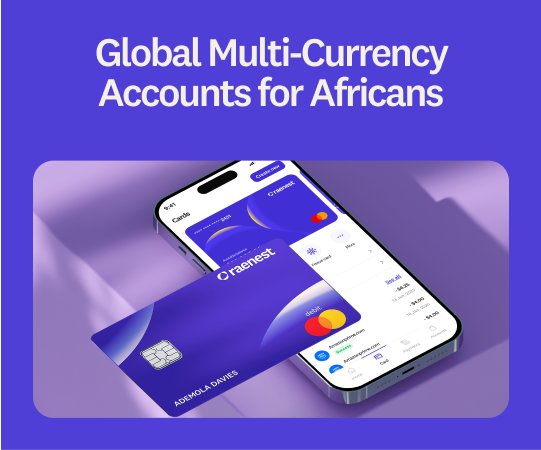
Raenest is your answer. Raenest gives you multicurrency accounts in USD, GBP and EUR that you can use to receive payments directly from clients and platforms like Upwork, Deel, Stripe, and Fiverr, along with virtual cards for online payments, subscriptions, and ads. Once the personal brand has done its job of bringing clients to you, the next step is to have an account ready to receive the payments those clients make. Create a Raenest account today.
Frequently Asked Questions
- How long does it take to build a personal brand that attracts clients?
Most freelancers see early traction within three to six months of consistent output, with reliable inbound clients arriving somewhere between months six and eighteen. The exact timeline depends on the platform, the niche, and how clearly the brand is positioned around a specific problem.
- Do I need a large following to attract clients?
No. A small, well-targeted audience of 200 to 2000 people in your industry will usually generate more client work than 10,000 random followers. The metric that matters is whether the right people see your work, not how many people see it in total.
- What is the difference between personal branding and marketing?
Marketing is the active work of promoting a specific service or offer. Personal branding is the longer, steadier work of building a reputation that makes marketing easier. A strong personal brand reduces how much marketing you need to do, because clients arrive already understanding what you offer and why they want to work with you.
- How do freelancers in Africa build a personal brand for international clients?
Freelancers in Africa typically build international personal brands through a mix of LinkedIn for professional credibility, Twitter/X or Instagram depending on the industry, a clean personal website that signals competence to global clients, and active participation in niche Slack or Discord communities where international hiring managers already gather. Showing work publicly through case studies, threads, and newsletters compounds over time and bypasses geographic barriers. Read our blog to learn more.