How Small Business Owners Can Use LinkedIn to Get Clients in 2026

If LinkedIn has ever felt like a platform that works brilliantly for everyone except you, you’re in very good company. Maybe you wrote something thoughtful about your business. Maybe you shared a milestone. You hit publish, checked back an hour later and got four likes. Two of them were from your cousins. So you concluded LinkedIn doesn't work for small businesses. And you moved on.
Here's the truth: LinkedIn doesn't work the way most small business owners use it. But for those who figure out the difference, it becomes the most effective client-generation tool available without paid ads, without a big following, and without going viral.
To put this into context, LinkedIn has over 950 million users worldwide. So while everyone else is fighting for visibility on Instagram and Facebook, your ideal clients are opening LinkedIn every morning with their coffee, looking for someone who does exactly what you do.
But access alone does not create results. The small businesses winning on LinkedIn in 2026 aren't the ones posting the most. They're the ones with a focused message, a clearly defined audience, and content that builds trust. This guide will show you exactly how to become one of them.
Whether you've never touched LinkedIn seriously or you've been showing up inconsistently and wondering why nothing sticks, by the end of this, you'll have a clear strategy for turning LinkedIn into a steady source of visibility, relationships, and revenue for your small business.
Let's get into it.
What is LinkedIn Marketing?
LinkedIn marketing is the use of LinkedIn as a platform for building professional visibility, brand presence, and business opportunities. It exists within a space designed for work, where people and organisations present themselves through the lens of industry, expertise, and professional identity.
At its core, it is about how individuals and businesses are represented and discovered in a professional environment. Rather than focusing on entertainment or personal expression, it centres on the language of work, the exchange of ideas, and the signals that define credibility within a field.
It also extends to brand positioning, shaping how a person or company is perceived within their industry and the value they are associated with. This perception is not limited to a static profile but is shaped by their broader presence across the platform.
Within that same space, LinkedIn marketing becomes a form of business communication in public view, where updates, insights, and perspectives are shared in a network of professionals, organisations, and decision-makers. These interactions contribute to how relevance and authority are understood over time.
Taken together, it functions as the creation of market presence, where visibility builds gradually within a specific industry or field. It is the ongoing establishment of recognition in a space where work, ideas, and professional identity naturally overlap.
LinkedIn Marketing Strategy For Small Businesses: How to get clients in 2026
Now that we know the why, let’s look at the how.
The good news is that LinkedIn doesn't require a big budget, a massive following, or years of experience on the platform to start working for your business. What it requires is the right approach, applied consistently. Here is exactly what that looks like.
Step 1: Set up your LinkedIn presence (personal profile + Company Page)
Before any LinkedIn marketing strategy begins, a small business needs two things in place on LinkedIn: a strong personal profile and a properly created Company Page. These two work together.
Your profile is the first thing a potential client checks after they come across your content. If it doesn't immediately communicate who you are, who you help, and what results you create, they will leave without reaching out. Treat it like a landing page. Use a professional profile and cover photo, your headline should lead with the outcome you create for clients, your About section should speak directly to the person you want to work with using optimized keywords, and your Featured section should show proof of your work, whether that is a case study, a client result, or a lead magnet they can download.
Alongside this, you create a Company Page. This is the official LinkedIn profile for your business. You can set it up by going to the “For Business” section and selecting “Create a Company Page,” then filling in details such as your company name, industry, website, logo, and a short description of what the business does. Once created, it becomes the central identity of your brand on the platform.
🔗ICYMI, here’s how to make money on Facebook.
Step 2: Define your target audience and positioning
Once your presence is set up, the next step is defining who your business is speaking to and how it should be positioned on LinkedIn.
Start with your target audience. This includes the specific industries your business serves, the types of companies within those industries, and the decision-makers involved in the buying process. These are usually defined by roles such as founders, managers, directors, or other key stakeholders, depending on what your business offers. The goal is to be precise enough that you can clearly identify who your content and outreach are intended for.
From there, define the problems your business solves for that audience. This should be specific and focused. It could relate to improving efficiency, solving operational gaps, reducing costs, or delivering a particular service outcome. This definition helps ensure that your messaging stays consistent and relevant.
Positioning is the outcome of combining your audience and the problems you solve. It is how your business is understood within your market on LinkedIn. It should be reflected consistently across your profile, company page, and content so there is a clear, repeatable idea of what your business does and who it serves.
Step 3: Build your content direction
After defining your target audience and positioning, it’s time to decide what your business will communicate on LinkedIn in a structured, consistent way.
This starts with identifying a small set of content themes your business will focus on over time. These themes should come directly from your expertise, your product or service, and the problems your audience regularly faces. In most cases, three to five themes are enough to keep your communication focused without becoming scattered.
Common themes include industry insights, recurring customer challenges, explanations of how your solution works, and perspectives on changes within your sector. Each theme should clearly connect back to the audience defined in the previous step, so the content stays relevant to the same group of people.
The role of this step is to create direction for communication. Every post or update should fit into one of these themes to keep your messaging consistent. Over time, this consistency shapes how your business is understood on LinkedIn and strengthens the positioning you have already defined.
Step 4: Set a consistent posting system
With your content direction defined, you now need a repeatable posting system to execute. A posting system is simply how often you publish content and how you maintain consistency over time. It could be curated as a calendar.
According to recent Buffer studies, posting 2 to 5 times weekly on LinkedIn is the sweet spot for improving reach and engagement without overwhelming your schedule. This could be a good posting plan to work with.
Each post should follow a clear structure. It should focus on one idea, communicate it in simple terms, and connect it back to your audience’s context. The aim is clarity, not complexity. Overloading a post with multiple ideas reduces its impact and makes it harder for your audience to understand what you want them to take away.
Consistency also plays a role in visibility. LinkedIn distributes content based on engagement patterns, so regular posting increases the likelihood that your content will reach the right audience over time. Irregular activity makes it harder for the platform to establish that pattern.
Finally, use multiple content formats available on LinkedIn. Written posts are the foundation, but the platform supports a range of formats that serve different purposes. Video is one of the strongest-performing formats on LinkedIn and often generates higher engagement than static posts. It helps increase visibility and improves how audiences interact with content when used appropriately. Other formats, such as carousels, documents, and images, also help increase reach and keep content varied. Using different formats allows your business to communicate ideas in multiple ways while maintaining consistency in message and positioning.
Step 5: Build visibility through engagement
Engagement is a core part of LinkedIn visibility and works alongside your content to expand your reach. This means you are not only publishing posts, but also interacting with posts from your target audience, industry peers, and potential customers. It includes commenting on relevant posts, responding to discussions, and participating in industry conversations.
When you do this consistently, you place your business inside the same spaces where your audience is already active. Over time, this increases the chances of people recognising your name and profile even before they engage with your content directly.
Step 6: Use LinkedIn Ads to scale reach
Once your organic activity is in place through content and engagement, LinkedIn Ads become the way to extend your reach beyond your immediate network.
It shifts your visibility from people who already encounter your content to a defined audience you actively select based on job title, industry, company size, and location.
With that level of targeting available, the focus becomes precision. You are no longer broadcasting broadly but placing your message directly in front of decision-makers who match your ideal customer profile.
You can use it to support specific business outcomes such as promoting services, increasing awareness, or driving traffic to key pages. Instead of waiting for discovery through organic activity, your business is intentionally placed in front of the right audience within their LinkedIn feed.
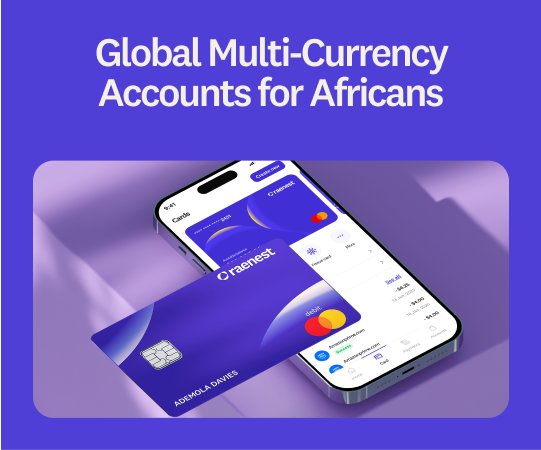
Execution also depends on how smoothly your campaigns are funded and managed. For small businesses running LinkedIn Ads across different regions, using the Raenest card simplifies payments by enabling USD funding, improving spend control, and reducing interruptions caused by inconsistent payment systems. Don’t have a Raenest card? Create one today.
With these 6 steps, I hope I’ve been able to convince you that you can definitely grow and gain visibility for your business on LinkedIn. Remember, the goal is to build a system that works for you and winning is just a click away.