.jpg)

How Stablecoins Help Kenyans Hedge Against Currency Fluctuations

When the shilling loses value faster than you can earn it, every payday can feel like watching your savings shrink. These currency fluctuations are why more Kenyans are turning to stablecoins to maintain stable value even when the shilling doesn't.
Unlike regular cryptocurrencies that swing wildly in price, stablecoins are built to keep a steady value by tracking the US dollar, which makes them a practical tool for protecting what you've earned. This guide explains what stablecoins are and how they protect the value of your money.
What are stablecoins?
Think of a stablecoin as digital money that stays worth about $1, rather than jumping around in price like other cryptocurrencies. Technically, it's a digital currency designed to track a real-world currency, most commonly the USD, and the best-known ones, USDC and USDT, aim to stay worth $1 each. So a unit today should still be worth about the same next month. In practice, they give you a way to keep value in USD terms without needing a US bank account, which is why they've caught on in markets where the local currency is under pressure.
Why the shilling's fluctuations may affect your money
The Kenyan shilling, like many emerging-market currencies, tends to lose ground against the USD over time, with the occasional sharp drop along the way. Whether you're a freelancer paid from abroad or a household saving towards school fees, that steady slide means the same amount of money covers less each year. Keeping everything in shillings leaves your savings exposed to a rate you can't control, and pricing or saving in a stable, USD-linked asset is one way people try to take that risk off the table.
How stablecoins protect the value of your money
The whole point is simple. Instead of keeping everything in shillings and watching its value drift with the exchange rate, you keep it in a stable currency
- Most stablecoins are pegged one-to-one to a strong currency like the US dollar and backed by cash or short-term reserves, so a coin stays worth about $1.
- They defend against inflation. When the local currency is weak, people use stablecoins to preserve their buying power rather than watch it erode.
- They work 24/7, even on bank holidays, and you can keep and manage digital dollars from a phone app, without branch visits or cross-border paperwork.
- They're quick to access. When you need to spend, you can convert your stablecoins back to shillings fast, so the money is there when you need it.
The risks worth knowing
Stablecoins are not risk-free, so it's worth weighing the pros and cons before you rely on them.
- They rely on their issuer. A stablecoin only stays at its peg if the company behind it manages its reserves properly. Well-run ones rarely drift far from $1, but a poorly backed coin can break its peg.
- The rules are still forming. Kenya's regulators are still shaping how digital assets are treated, so keep an eye on the current position and any tax implications.
- Access carries its own risk. The platform you use to receive or convert stablecoins matters, so stick to reputable, regulated providers rather than random apps.
This isn't financial advice, and how much of your money to allocate to stablecoins, if any, depends on your own situation. When in doubt, speak to a qualified financial adviser.
How to Receive Payments in Stablecoins
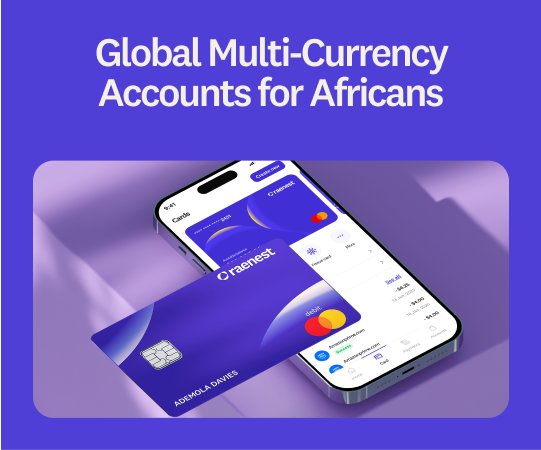
You don't need to become a crypto trader to do any of this. Raenest, a multi-currency account built for people who earn and get paid across borders, lets you receive USDC and USDT in Kenya into your Raenest account.
Here’s how it works: When a client or platform pays you in stablecoin, you receive USDT and USDC straight into your Raenest account, which are then converted to USD at the same value. So instead of a volatile coin, you end up with digital dollars in your balance, following the US dollar rather than the shilling. That's the protection in action.
From there, it works like the rest of your Raenest balance. You keep it in USD, convert to Kenyan shillings whenever the rate suits you, or spend it with a USD virtual card that works on global sites.
How to create your stablecoin wallet address on Raenest
Setting up your stablecoin wallet address on Raenest only takes a few minutes.
- Download the Raenest app from the App Store or Play Store and sign up or login.
- Tap Verify Now on your dashboard and complete KYC with a valid government-issued ID, such as your passport, driving licence, or national ID.
- In the Accounts section, create a USD, GBP, or EUR account. You'll choose the account purpose and provide proof of earnings.
- Once you have a USD account, tap your USD account and tap on Create Stablecoin Account, choose either USDC or USDT, complete the brief work questionnaire or accept the terms, and your deposit addresses will be generated.
- Once it's set up, you can receive USDT and USDC via Ethereum, Tron, Solana, Polygon, or the Binance network.
- Any USDC or USDT you receive is automatically converted to USD at a one-to-one rate, so you can spend directly from your USD account.
Final thoughts
Currency fluctuations and devaluations are out of your hands, but how much of it you're exposed to isn't. Used sensibly, stablecoins give Kenyans a straightforward way to protect the value of what they earn, and Raenest makes that as simple as receiving a payment.
Open your free Raenest account today and keep more of what you earn.
Frequently asked questions
1. What is a stablecoin?
A stablecoin is a digital currency that tracks a real-world currency, usually USD, so it aims to maintain a value of about $1. USDC and USDT are the most widely used.
2. Can I receive USDC and USDT in Kenya?
Yes. With Raenest, you can receive USDC and USDT in Kenya straight into your account, and they're converted to USD at the same value, so your money follows the US dollar rather than the shilling.
3. Do I need a crypto wallet to use stablecoins with Raenest?
No. You can receive USDT and USDC straight into your Raenest account, where they're converted to USD, so there's no separate wallet or exchange to manage.
4. Is using stablecoins legal in Kenya?
Digital assets sit in an evolving regulatory space in Kenya. Rules and tax treatment can change, so check the current position and consider speaking to a professional before you rely on them.


