
How to Find Remote Jobs in the UK as a Nigerian

Somewhere in Lagos, Enugu, or Ibadan, a product designer logs into a stand-up with a team in Manchester. A few years ago, that picture needed a visa, a flight and a winter coat. Today, it needs a laptop, a decent internet connection, and a company in the UK that is comfortable hiring beyond its postcode. There are more of those opportunities than most people assume.
If you're reading this, there's a good chance you want a seat on the bus too, and we're here to show you how to get a UK remote job as a Nigerian without relocating.
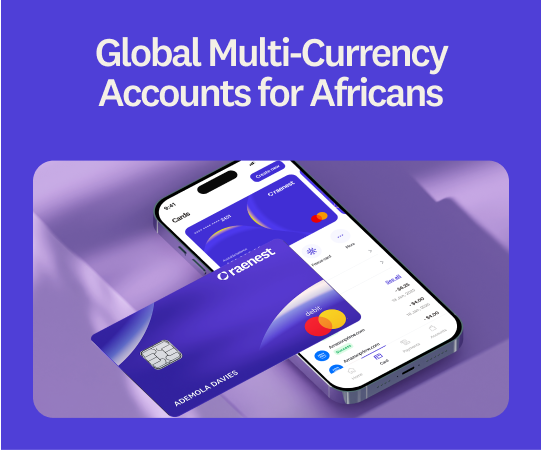
Before we get into it, do you have a Raenest GBP account? You'll need one to receive your payments. A Raenest GBP account gives you a UK account number and sort code, so a British employer or client can pay you by ordinary bank transfer, the same way they pay anyone else in the UK. It takes a few minutes to set up in the app, and having it ready before your first interview means the offer arrives to a setup that already works. If you have one already, you're a step ahead. If you don’t, create one now.
Now that that's done, here's the short version of what follows. Finding a remote job in the UK as a Nigerian comes down to seven steps:
- Understand how UK companies can legally hire people living in Nigeria.
- Identify the industries and roles that offer international remote opportunities.
- Find legitimate UK remote job openings on the right platforms.
- Optimise your CV and LinkedIn profile for British employers.
- Build a portfolio that demonstrates your ability to work remotely.
- Prepare for interviews, assessments and UK working hours.
- Verify job offers and understand how you'll receive your salary.
Let's take them one at a time.
1. Understand How UK Companies Hire Remote Workers in Nigeria
Before you start applying for remote jobs in the UK, you need to understand one important thing: a company advertising a remote position in the UK does not automatically mean you can do the job from Nigeria.
Some companies allow employees to work remotely only if they live in the UK. Others hire internationally and have arrangements that allow them to employ people in different countries.
This distinction matters because you don't want to spend weeks applying for jobs only to discover that the company cannot hire someone based in Nigeria.
Generally, UK companies can engage people living in Nigeria through three common arrangements.
Working as an independent contractor
Some UK businesses hire international professionals as independent contractors rather than employees. In this arrangement, you provide services under a contract, agree on your deliverables and payment terms, and invoice the company for your work.
For example, a UK marketing agency might hire a Nigerian content writer to produce blog articles every month. You work remotely from Nigeria, submit your work according to the agreed schedule and receive payment based on your contract.
As a contractor, you are generally responsible for managing your own tax obligations and business expenses in Nigeria. You may also have fewer employment benefits than a salaried employee.
Getting hired through an Employer of Record (EOR)
An Employer of Record is a third-party organisation that legally employs workers on behalf of another company in countries where that company does not have its own legal entity. This arrangement allows you to work for the UK company while being formally employed through the EOR in Nigeria. Some well-known EOR providers include Deel and Remote.
Working for a company with an entity in Nigeria
Some international businesses have registered entities or local operations in Nigeria. These companies can hire you directly through their Nigerian operations, depending on their employment structure.
In this case, you may work with a UK-based team while your employment contract and payroll are handled locally. The arrangement a company uses will determine your employment status, benefits, tax responsibilities and payment process. Always ask about these details before accepting an offer.
Do you need a UK work visa to work remotely for a UK company from Nigeria?
Generally, since you are not travelling to the UK to take up employment there, you do not need a UK work visa simply because you work remotely for a UK-based company while living in Nigeria.
However, if the position requires you to relocate to the UK or work there in person, you’ll need the appropriate immigration permission. A UK employer may need to sponsor your visa, depending on the job and your circumstances.
To help you distinguish, for a remote position, pay attention to the location requirements in the job description. Look for terms such as:
- Remote worldwide
- Work from anywhere
- Remote, EMEA
- Remote, Africa
- International remote
- Open to candidates in Nigeria
These descriptions are more promising than a listing that simply says UK remote.
🔗Also read: how to get paid by a UK client as a Nigerian Freelancer.
2. Identify the Best Industries and Remote Jobs to Target
Now that you understand how international hiring works, the next step is identifying the roles worth applying for.
Not every profession offers the same number of international remote opportunities. Some industries have established remote working arrangements and regularly hire professionals across different countries.
Here are some industries to consider when looking for remote jobs in the UK as a Nigerian:
Technology and Software Development
Technology remains one of the strongest industries for international remote work. Many software companies already operate with distributed teams, making it possible to work with colleagues across different countries. Some remote technology jobs you can apply for include:
- Software developer
- Front-end developer
- Back-end developer
- Full-stack developer
- Product designer
- UI/UX designer
- Data analyst
- Cybersecurity analyst
- Cloud engineer
- Quality assurance engineer
- Product manager
If you have experience with programming languages, software development frameworks, cloud infrastructure or product design tools, look for companies that hire internationally.
Digital Marketing and Content
Businesses need to reach customers, build their online presence and communicate their products effectively. This creates opportunities for marketing and content professionals who can work remotely. Some roles to look out for include:
- SEO specialist
- Content writer
- Content strategist
- Social media manager
- Email marketing specialist
- Digital marketing manager
- Copywriter
- Marketing analyst
- Growth marketer
- Brand designer
If you have experience growing website traffic, managing marketing campaigns, creating content, or improving conversion rates, you can take these skills to international employers.
Customer Support and Operations
Many UK businesses operate customer support teams remotely, particularly companies serving customers across different time zones. You can find opportunities in:
- Customer support
- Customer success
- Technical support
- Virtual assistance
- Operations management
- Project coordination
- Account management
- Sales development
- Business development
For these roles, employers often look for strong communication, organisation, problem-solving and customer relationship management skills.
Finance and Accounting
Businesses also need professionals who can manage financial records, analyse business performance and support their accounting operations. Some remote finance jobs include:
- Bookkeeper
- Financial analyst
- Accounts assistant
- Payroll specialist
- Financial accountant
- Management accountant
- Accounts payable specialist
- Accounts receivable specialist
Professional qualifications and familiarity with accounting software such as Xero, QuickBooks and Sage can strengthen your application.
Education and Online Learning
The growth of online education has created opportunities for teachers, trainers and education professionals to work with international organisations. Some roles include:
- Online tutor
- English language tutor
- Curriculum developer
- Instructional designer
- Learning and development specialist
- Educational content writer
Depending on the role, you may need teaching qualifications, subject expertise or experience creating digital learning materials.
A useful tip: Don't limit your search to job titles that contain the word remote. Search for your profession alongside terms such as remote worldwide, international hiring, work from anywhere and EMEA remote. This helps you find opportunities that may not appear in a search for UK remote jobs alone.
3. Find UK Remote Job Opportunities on the Right Platforms
Knowing which roles to target is one thing. Finding companies that are actually willing to hire Nigerians is another. Fortunately, several job platforms make it easier to find remote vacancies across the UK and other international markets. Here are some websites to include in your job search.
LinkedIn Jobs
LinkedIn Jobs is one of the best places to find remote opportunities with UK companies. You can search for specific roles, filter by remote work and follow companies that interest you. For better results, try searches such as:
- Remote content writer UK
- Remote software developer UK
- UK companies hiring internationally
- Remote jobs open to Nigeria
- EMEA remote marketing jobs
- Remote customer support jobs worldwide
You should also follow recruiters, hiring managers and companies in your industry. Some employers share vacancies on their LinkedIn pages before they appear on other job boards.
One important thing: select the remote filter, but always check the location requirements in the full job description. A job marked remote may still require you to live in the UK.
Indeed UK
Indeed UK aggregates vacancies from employers and recruitment agencies. You can search for roles using your preferred job title and include keywords such as international, worldwide and remote. For example, searching for remote SEO specialist or remote customer service jobs can help you find relevant opportunities. Read each listing carefully to establish whether the employer accepts applications from outside the UK.
Reed
Reed is another UK job platform where you can find vacancies across different industries. It features opportunities in technology, marketing, finance, administration, customer service and other professional fields. You can use the platform to identify companies hiring for your role and then visit their official career pages to check their international hiring policies.
We Work Remotely
We Work Remotely focuses on remote employment opportunities across different industries. You'll find vacancies in programming, design, marketing, sales, customer support and management. Some employers advertise positions open to applicants worldwide, making the platform useful for Nigerians searching for international remote jobs.
Remote OK
Remote OK lists remote opportunities from companies around the world. You can browse vacancies by profession, including software development, marketing, design, finance and customer support. Pay attention to the location tags attached to each listing. Look for opportunities marked worldwide or international rather than assuming every remote position is available to Nigerian applicants.
Himalayas
Himalayas is another useful platform for finding remote jobs. You can filter opportunities by job category, employment type and location. Some listings specify the countries or regions where applicants must reside. This makes it easier to identify roles that may accept applications from Nigeria.
Working Nomads
Working Nomads curates remote vacancies across different industries. You can find opportunities in marketing, development, design, management and customer support. Set up job alerts for your preferred categories so you can receive notifications when relevant positions become available.
RemoteWork.ng
RemoteWork.ng is particularly useful because it focuses on international remote jobs that Nigerians can apply for. The platform checks job location requirements and separates opportunities that explicitly accept Nigerian applicants from those open worldwide. This can save you time when searching for jobs because you can focus on vacancies that are more likely to accept your location.
Company Career Pages
Don't depend entirely on job boards. Some companies publish vacancies directly on their websites. If you have a list of UK companies you'd like to work for, visit their career pages regularly. Look for sections titled Careers, Jobs, Work With Us or Join Our Team.
You can also check their job descriptions on recruitment platforms such as Greenhouse, Lever and Ashby.
How to know if a remote job is open to Nigerians
Before applying, look for these details in the job description:
- Remote, UK only: You generally need to be based in the UK to qualify for the position.
- Remote, worldwide: The company may accept applications from any country, including Nigeria, subject to its hiring restrictions.
- Remote, EMEA: The role covers Europe, the Middle East and Africa. Check whether Nigeria is included in the company's eligible locations.
- Remote, Africa: The company accepts applicants from eligible African countries. Confirm that Nigeria is on the list.
- Remote, Nigeria: The employer explicitly accepts applicants based in Nigeria.
- Hybrid, London: You will likely need to live in or near London to attend the office on designated days.
If the location requirements aren't clear, contact the recruiter before spending time on your application.
🔗Also read: What to check before signing a remote work contract.
4. Optimise Your CV and LinkedIn Profile for UK Employers
You've found a few promising vacancies. Now you need to convince the employer that you're the right person for the job. Your CV and LinkedIn profile are often the first things a recruiter sees, so they need to communicate your experience, skills and achievements clearly.
A UK employer may receive applications from candidates in several countries. Your application should make it easy for them to understand what you bring to the role.
Write a UK-friendly CV
You don't necessarily need a completely different CV to apply for UK jobs, but you should understand the conventions UK employers generally expect. Here are some things to keep in mind.
- Keep your CV clear and concise.
Aim for one or two pages, depending on your experience. Use simple headings, bullet points and a professional font. Avoid unnecessary graphics, complicated layouts and long paragraphs.
- Include your relevant contact details.
Your CV should include:
- Full name
- Professional email address
- Nigerian phone number with the +234 country code
- LinkedIn profile
- Portfolio or personal website, where relevant
- Your current location, such as Lagos, Nigeria
You don't need to include your date of birth, marital status, religion or a photograph.
- Highlight measurable achievements.
Don't just list your responsibilities. Show what you accomplished in previous roles.
For example, instead of writing:
Responsible for managing the company's social media accounts.
You could write:
Managed social media campaigns across three platforms, increasing audience engagement by 35% within six months.
Where possible, include numbers that demonstrate your impact, such as revenue generated, traffic growth, projects completed, customers supported or operational improvements.
- Tailor your CV to each job.
Read the job description carefully and identify the skills and experience the employer is looking for. If a company wants someone with experience in SEO, content strategy and Google Analytics, make sure your CV clearly demonstrates those skills if you have them.
This also helps your CV match relevant keywords that applicant tracking systems (ATS) may use when screening applications.
The UK's National Careers Service also recommends tailoring your CV to each vacancy and keeping the information clear and relevant.
Optimise Your LinkedIn Profile
Your LinkedIn profile should tell the same professional story as your CV. Start with a headline that clearly communicates your role and expertise. For example:
- Software Engineer | React | Node.js | Building Scalable Applications
- SEO Specialist | Content Strategy | Organic Growth
- Product Designer | UI/UX | Figma | Digital Product Design
- Customer Success Specialist | Client Relations | CRM
Next, update your About section to explain your professional experience, strengths and the type of opportunities you're interested in. Add relevant work experience, certifications, skills and recommendations.
You should also:
- Set your job preferences to remote opportunities.
- Specify the roles you're interested in.
- Add a portfolio or website where applicable.
- Follow UK companies in your industry.
- Connect with recruiters and professionals working in your target field.
- Engage with relevant industry discussions.
You can also turn on LinkedIn's Open to Work feature to signal that you're available for opportunities.
5. Build a Portfolio That Demonstrates Your Skills
For many remote roles, employers want to see evidence of what you can do before they make a hiring decision. A portfolio helps you provide that evidence. You don't necessarily need years of international work experience to build one. What matters is demonstrating that you understand your profession and can deliver quality work.
The type of portfolio you create depends on your career:
- For writers and content marketers: Include published articles, SEO projects, content strategies, campaign results and examples of how your work contributed to business goals.
- For designers: Showcase your UI/UX projects, design systems, prototypes, branding projects and case studies explaining your design decisions.
- For software developers: Create a GitHub profile with code samples, completed projects, applications and links to live demonstrations.
- For digital marketers: Include campaign reports, SEO results, social media growth, email marketing performance and examples of successful marketing strategies.
- For virtual assistants and operations professionals: Demonstrate your experience with project management tools, scheduling systems, administrative workflows and customer relationship management platforms.
If you don't have previous client projects you can share, create sample projects that demonstrate your skills.
For example, a product designer can redesign an existing app interface and explain the decisions behind the redesign. A content writer can create a sample content strategy for a fictional business.
Ultimately, your portfolio should make it easy for a potential employer to answer three questions:
- What can you do?
- How good are you at it?
- What results can you deliver?
6. Prepare for UK Remote Job Interviews
Getting an interview is a significant step, but you still need to demonstrate that you're the right candidate. Remote interviews are usually conducted through video conferencing platforms such as Zoom, Google Meet or Microsoft Teams.
Here are some ways to prepare.
- Research the company.
Before your interview, visit the company's website and understand its products, services, customers and business model. Read the job description again and identify the responsibilities you'll be expected to handle. You should also prepare examples of how your previous experience relates to the role.
- Practise answering common interview questions.
Some questions you may encounter include:
- Tell me about yourself.
- Why do you want to work for our company?
- What interests you about this position?
- How do you manage your workload when working remotely?
- Tell me about a challenging project you've worked on.
- How do you communicate with colleagues across different time zones?
- How do you handle feedback and tight deadlines?
Prepare specific examples rather than memorising generic answers.
One useful approach is the STAR method: Situation, Task, Action and Result. It helps you explain the circumstances of a project, your responsibilities, what you did and the outcome.
- Check your internet connection and equipment.
Since you're applying for a remote position, your interview is also an opportunity to demonstrate that you can work effectively online. Before the interview:
- Test your internet connection.
- Check your microphone and camera.
- Choose a quiet, well-lit location.
- Keep your laptop or phone fully charged.
- Join the meeting a few minutes early.
- Have your CV and portfolio available.
- Understand UK working hours.
Nigeria operates on West Africa Time (WAT), which is UTC+1. The UK operates on Greenwich Mean Time (GMT) during winter and British Summer Time (BST) during summer.
This means that Nigeria is one hour ahead of the UK during winter and has the same time during British Summer Time.
7. Verify the Job Offer and Understand How You'll Get Paid
You've submitted your application, completed the interviews and received an offer. Congratulations!
Before accepting, take time to verify the company, review your contract and understand how your salary will reach you in Nigeria. Unfortunately, fake international job offers are common. Some scammers use the names and logos of legitimate UK companies to convince applicants that they have secured employment.
Here are some things to check.
- Verify the company.
Visit the company's official website and confirm that the vacancy exists. Check its LinkedIn page, company details and recruitment team. If a recruiter contacts you, verify their identity through the company's official channels. You can also check a UK company's registration details through Companies House.
- Be careful with requests for upfront payments.
A legitimate employer should not ask you to pay a recruitment fee, job processing fee or payment to secure your position. Be particularly careful if someone asks you to pay for:
- Mandatory training before employment.
- Equipment supposedly required to start work.
- Background checks through an unfamiliar payment link.
- Visa processing for a job that is supposedly remote from Nigeria.
- Administrative or application fees.
The UK government's guidance on employment fraud warns applicants about fake job offers, fraudulent visa promises and requests for money.
- Review your employment contract.
Before signing, confirm:
- Your job title and responsibilities.
- Your salary and payment currency.
- Your payment schedule.
- Your employment status.
- Your working hours and time zone.
- Your leave entitlement and benefits, where applicable.
- Your notice period and termination conditions.
- Your tax and other statutory obligations.
If you're working as an independent contractor, also understand your invoicing requirements and whether the company expects you to cover any business expenses.
- Set up a reliable way to receive your salary.
Once you've confirmed the payment arrangement, make sure you have an account that can receive the currency in which you'll be paid.
If your UK employer pays in pounds sterling, a Raenest GBP account gives you UK banking details, including an account number and sort code. You can share these details with your employer or client so they can send payments through supported UK bank transfer methods.
With Raenest, you can also hold your GBP balance and convert it when you need to use the money in another currency. If you haven't created an account yet, open a Raenest account and set up your GBP wallet.
Tips to Improve Your Chances of Getting a Remote Job in the UK
Finding a UK remote job as a Nigerian requires more than submitting applications. You need a consistent strategy that helps you get noticed and demonstrate your value.mHere are a few additional tips to improve your chances.
- Apply early.
Some remote vacancies attract hundreds of applications. Applying shortly after a position is advertised can help you get your application in before the employer closes recruitment.
Set up job alerts on LinkedIn and other platforms so you don't have to search from scratch every day.
- Don't apply for every remote vacancy you find.
Focus on positions that match your skills, experience and career level. A well-tailored application for a suitable position is generally more useful than dozens of applications sent without considering the job requirements.
- Network with professionals in the UK.
Connect with people working in your industry, particularly those employed by companies you'd like to join. Participate in relevant LinkedIn discussions, attend virtual industry events and engage with professional communities. Some opportunities are shared through professional networks before they reach public job boards.
- Develop skills that international employers need.
Identify the tools, technologies and professional skills frequently mentioned in job descriptions within your industry. For example, a content marketer may need experience with SEMrush, Google Analytics, HubSpot and content management systems. A project manager may need familiarity with Jira, Asana or Monday.com. Investing in relevant skills can make your application more competitive.
- Prepare for assessments.
Some employers require candidates to complete technical tests, writing assignments, case studies or practical exercises. Practise tasks relevant to your profession so you can demonstrate your abilities confidently.
- Follow up professionally.
If you've completed an interview and haven't received an update within the timeframe provided, send a polite follow-up email. You can ask whether there are any updates on the recruitment process and reiterate your interest in the position.
- Be consistent.
You may not get an offer after your first application, or even your tenth. Keep improving your CV, expanding your portfolio and applying for relevant opportunities.
Treat your job search as an ongoing project. Track the companies you've applied to, the roles you've targeted, interview dates and feedback you receive. Over time, this helps you identify what's working and where you need to improve.
Frequently Asked Questions About Finding Remote Jobs in the UK as a Nigerian
- Can I work remotely for a UK company while living in Nigeria?
Yes. Some UK companies hire professionals who live in Nigeria through independent contractor agreements, Employer of Record arrangements or local entities. However, not every UK company accepts international applicants, so check the location requirements before applying.
- Do I need a UK visa to work remotely for a UK company from Nigeria?
Generally, no. If you remain in Nigeria and perform your work remotely, you don't need a UK work visa simply because your employer is based in the UK. If the job requires you to relocate or physically work in the UK, you will need the appropriate immigration permission.
- Which UK companies hire Nigerians to work remotely?
There is no permanent list of UK companies that accept Nigerian applicants for every remote vacancy. International technology companies, marketing agencies, financial services businesses, outsourcing companies and digital service providers may recruit professionals in Nigeria.
Look for companies advertising worldwide, EMEA, Africa or Nigeria remote positions. Always confirm the location requirements for the specific vacancy.
- What are the best websites to find UK remote jobs as a Nigerian?
Some useful websites include:
- LinkedIn Jobs
- Indeed UK
- Reed
- We Work Remotely
- Remote OK
- Himalayas
- Working Nomads
- RemoteWork.ng
You can also check the career pages of UK companies directly.
- What qualifications do I need to get a remote job in the UK?
The qualifications depend on the position. Some jobs require a university degree, professional certification or specific industry experience, while others prioritise practical skills and a strong portfolio. Always check the requirements listed in the job description.
- How much do UK remote jobs pay Nigerians?
Salaries vary depending on the industry, job title, experience, employer and employment arrangement.
Some companies use location-based salary bands, meaning they adjust compensation according to where an employee lives. Others offer standard salary ranges regardless of location.
Before accepting an offer, confirm whether the advertised salary applies to international applicants and whether it is quoted before or after taxes and deductions.
- Can I get a UK remote job without experience?
Yes, although your options may be more limited. Look for entry-level positions, internships, graduate opportunities and junior roles that accept international applicants.
You can also build experience through freelance projects, volunteering, personal projects and professional certifications. A portfolio that demonstrates your skills can help you compete for opportunities even when you have limited formal work experience.
- Can I get paid in pounds sterling while working remotely from Nigeria?
Yes. Some UK companies pay international contractors and employees in GBP, depending on their payment arrangements. If your employer supports UK bank transfers to your account, you can receive your salary through a GBP account with UK banking details, such as a Raenest GBP account. Confirm the accepted payment method with your employer before sharing your account details.
- Can I work two remote jobs for UK companies from Nigeria?
Potentially, yes, but it depends on the terms of your employment contracts. Some employers restrict employees from taking additional jobs, particularly where there are conflicts of interest, confidentiality concerns or working-hour requirements.
Review both contracts and make sure you can meet your responsibilities without breaching either agreement.