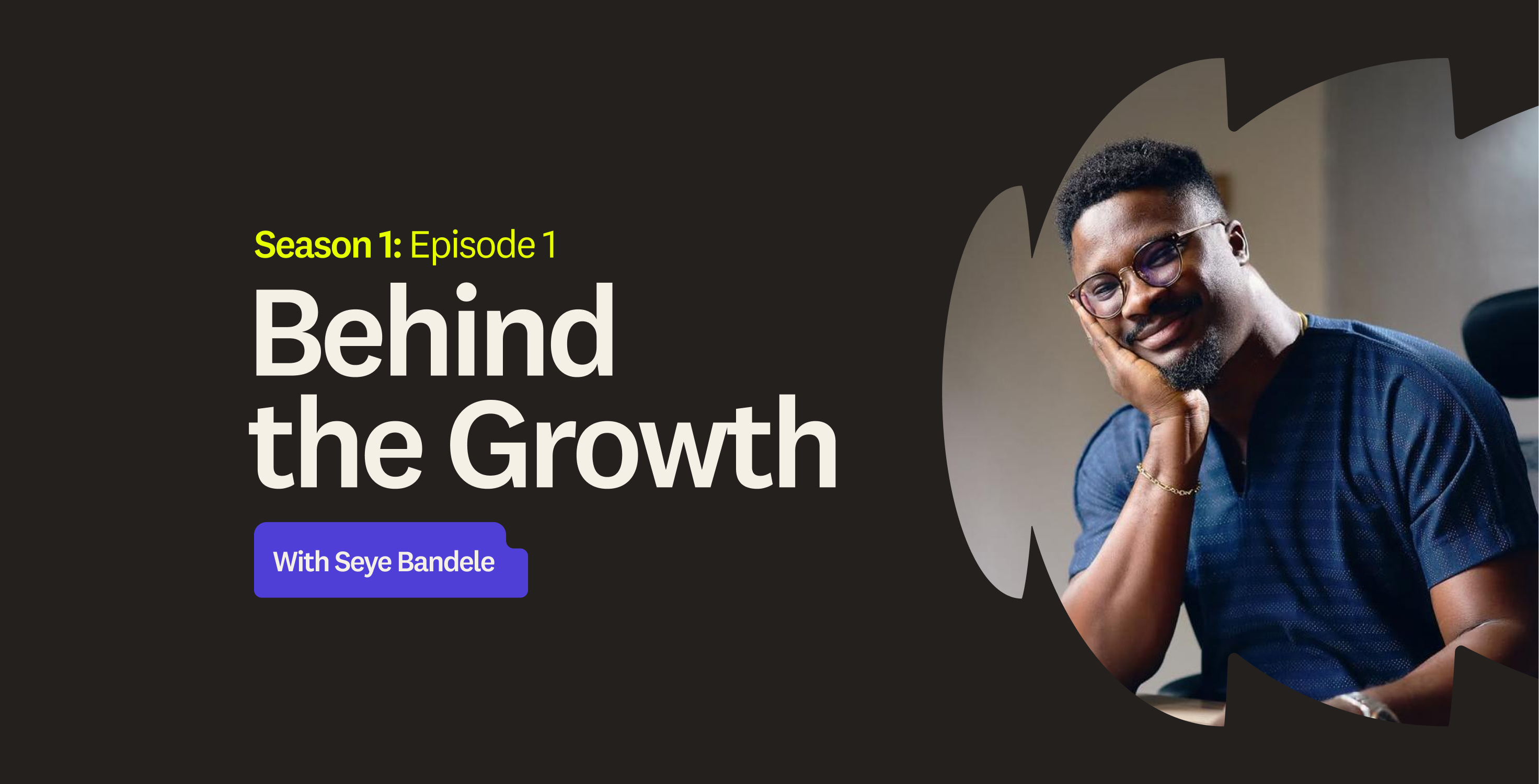

Behind the Growth: How PaidHR Found the Right Problem to Solve

Ever look at those founders who seem to have it all perfectly together? The ones who have raised millions in funding, locked in massive customer bases, and make scaling a business look entirely effortless?
Well, while their companies might look glamorous now, getting there probably wasn't. Behind every shiny press release is a trail of wrong turns, messy decisions and hard calls that nobody talks about.
Welcome to Behind the Growth.
In this new series, we are pulling back the curtain on how successful startups actually get built. We talk to founders across the continent and reverse-engineer their success to uncover the real, unfiltered decisions that drove them to the top.
We’re kicking things off with Seye Bandele, co-founder and CEO of PaidHR. What began as a simple internal communications tool has grown into a powerhouse people-and-finance platform used by hundreds of African teams. In this blog, we dive into exactly how he navigated that massive pivot, and why giving employees control over their pay became the ultimate catalyst for the company's growth.
If you’d also like to watch this interview, check it out below!
Let's get into it.
Temi: Hi Seye. Who are you, and what exactly does PaidHR do?
Seye: I am Seye Bandele, co-founder and CEO of PaidHR. At our core, we simplify work for African businesses and the people they employ.
We essentially do two things. On one side, we are an HR platform where you hire and manage your team. On the other, we operate almost like a global bank for those same employees, helping them manage their pay wherever they are. Bringing those two functions together in one place is the whole point.
Temi: Was this current business model always the plan?
Seye: Not at all. When my co-founder, Lekan Omotosho, and I started, we were looking at something much narrower. We’ve been friends for about fifteen years, so we went into this with a lot of built-in trust.
What we noticed first was how broken internal communication and HR workflows were inside companies. So, our first product was really just an engagement tool to help teams work together better. But our customers kept pointing us somewhere else. The deeper pain was never the chat features or the workflow. It was the money.
Temi: How did you navigate the transition from an engagement tool to what PaidHR is today?
Seye: It happened in stages. The engagement tool naturally evolved into a broader HR product, closer to what people think of when they hear Gusto. Then, we relaunched in 2021 and made a hard decision to build entirely around payroll, because that was the one thing every single business struggled with month after month.
The name followed the focus. In 2024, we rebranded from PadeHCM to PaidHR to make it clear what we do. By then, we had processed around ₦11 billion in salaries in a single year, and last year we closed an oversubscribed $1.8 million seed round led by Accion Venture Lab. Those numbers validated that the problem was real, and people desperately wanted it solved.
Temi: Let's talk about the problem itself. What are these businesses actually struggling with?
Seye: Compliance and cross-border payouts, mostly. And underneath it all, giving employees genuine control over their own money.
We treat payroll as the foundation of a business, not a monthly chore you dread. Automation handles the repetitive work, and the financial tools live directly in the platform your team already uses. When payroll is built that way, much of the stress just disappears.
Temi: You mentioned cross-border payouts. How does currency factor into that, especially since inflation and devaluation have been brutal lately?
Seye: They really have, and that reality pushed us to act. Holding your salary in a currency that loses value by the week is a massive problem. So, we built the ability for employees to receive their pay in the currency they prefer.
For many workers, being paid in a stable currency completely changes how safe their money feels. It is one of the features I am proudest of, because it answers a pain point people feel in their daily lives, not just on a spreadsheet.
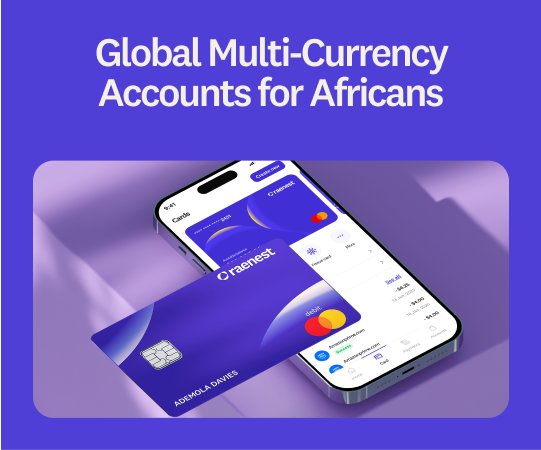
🔗 BTW: The currency challenge Seye just described is exactly what Raenest solves for businesses every day. Hold and pay in USD, GBP, and EUR without waiting on a local bank to catch up. [Open a Raenest account here.]
Temi: That actually brings us to Raenest. How has this partnership helped you handle those cross-border and currency challenges?
Seye: Cross-border pay only works if the money actually moves, and moves on time. That is where Raenest has been so valuable to us.
When salaries and teams cross borders, Raenest gives us the rails to move money quickly and hold it in multiple currencies. It has completely eased the liquidity pressure that used to slow us—and our clients—down. What made the partnership so easy is that we care about the exact same things: trust, compliance, customer experience, and making complicated financial operations feel simple for the end user.
Temi: Beyond just getting paid across borders, you also mentioned giving employees genuine control over their money. You care a lot about facilitating credit for workers. Why is that such a focus?
Seye: Because it is one of the biggest gaps in the financial landscape, and payroll is the best possible place to close it.
In many markets, formal social security is still in its early stages. Without a deep safety net to catch people between paydays or during an emergency, workers often reach for expensive, sometimes predatory, credit. We think that is unfair.
Our biggest advantage is data. When we run your payroll, we see a steady, verifiable income. That allows us to help facilitate affordable credit for employees who would otherwise be invisible to a traditional lender. Their salary becomes their guarantor.
Temi: You launched Earned Wage Access to help bridge that gap. How has the response been?
Seye: Faster than we expected, honestly.
When we first started, we disbursed less than ₦1 million a month. Later that same year, we crossed ₦50 million in a single month. That kind of jump tells you exactly how much people needed this. Waiting two or three weeks for money you have already earned is its own kind of tax, and earned wage access completely removes it.
Temi: Last question. What is next for PaidHR?
Seye: More of the same, just on a much bigger scale. We want to double down on growth and impact, and keep proving that Africa is a place where serious investors should be putting their money. The mission does not change, though. We are here to simplify work for employers and make life genuinely better for the people they employ. Everything else is just detail.
Final thoughts
Seye's story reminds us that the best companies rarely finish exactly where they started. PaidHR began as an engagement tool and evolved into the financial backbone for hundreds of teams because the founders chose to follow their customers' pain instead of sticking strictly to their original plan.
For any business building across borders, the lesson is clear: get the money part right, and the rest of your growth has room to happen.
Building across borders yourself? A Raenest business account puts multi-currency accounts and cross-border payments in one place.
That brings us to the end of this episode of Behind the Growth. See you in the next one.