
Unsolicited Opinion: Everything Tastes Better With a Movie


Picture this: It’s 7 pm, you’ve just come home from a long day of work. After slaving away in the kitchen, you’ve finally prepared the perfect meal: rice, stew, plantain, and chicken. You sit down, pick up your fork and pause. Something’s missing… Ah yes, you forgot to turn on your favourite Netflix series.
You see, you don’t know when it started, but you just can’t eat without watching something. And who can blame you? The male lead bites into a juicy burger, and you bite into yours. The heroine tears into a fried chicken drumstick, and suddenly your drumstick tastes crispier. Someone on screen cracks open an ice-cold drink, and you reach for yours like you're in the advert. The family in the film passes round a steaming pot of stew, and your plate of rice feels invited to the gathering. The villain takes a slow, menacing sip of red wine, and you take a slow, menacing sip of Fanta.
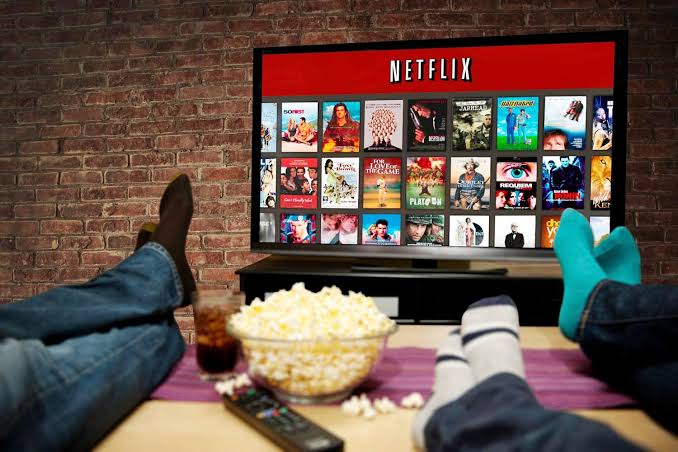
At the cinema, the lights go down, the trailers roll, and your hand finds the popcorn before your eyes find the screen. You're eating alone, technically. But you're also eating with everyone in the story.
Which is why I believe, with my whole chest, that everything tastes better with a movie. I can't prove it, because to prove it I'd have to eat something without a movie, and I'm not a monster.
Despite its many joys, somewhere along the line, eating in front of a screen became a crime. Nutritionists frown at it. Your aunt frowns at it. There's almost certainly a podcast about how bad it is, which people listen to while eating.
But before you put down your fork and stare at your plate like a medieval monk, consider this: humans have been eating in front of things for as long as there have been things to eat in front of. The screen is just the latest thing.
In the beginning, there was nothing on
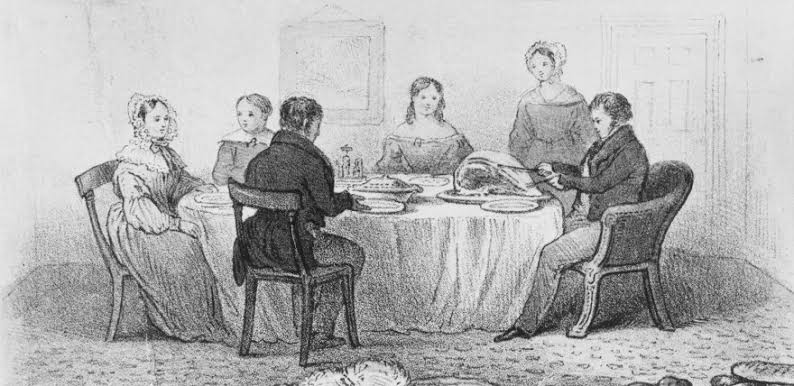
For most of human history, there was nothing to watch. People ate dinner looking at each other's faces, which explains a lot of history.
With no screen to distract them, families had to talk. About the harvest. About the state of the nation. About which neighbour was probably a witch. Historians call this "quality time".
Even so, our ancestors understood that a good show needs a snack. Crowds at arenas, circuses and theatres munched on nuts, fruit and pastries from vendors. Nobody brought a full pot of stew to watch a gladiator, mostly because it's hard to cheer for a lion with your mouth full.

Then came radio. In the 1930s, American families gathered round the set for President Roosevelt's fireside chats, which were like podcasts with fewer mattress adverts. Some families even ate in front of it. But radio had one fatal flaw: there was nothing to look at. You could listen to the radio while eating, but you couldn't watch it. People tried. It didn't help.
The great popcorn scandal
Cinemas were originally posh. In the silent film era, owners wanted their theatres to feel like opera houses: plush carpets, velvet seats and absolutely no snacking. Popcorn was for commoners, and commoners belonged outside on the pavement.
Then the Great Depression arrived, and everyone became a commoner. Theatres needed money. Street vendors were selling cheap popcorn right by the door. So cinema owners did what any sensible business does when someone else is making money outside its building: they moved the popcorn inside and charged more. A tradition was born, and it has endured ever since.

TV Dinners: The first Sin
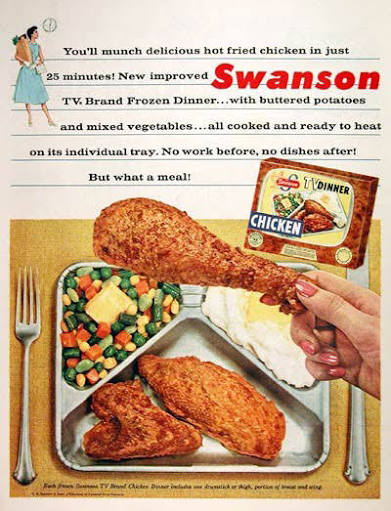
The 1950s, which were in black and white, brought television into the living room. With it came the TV dinner: a whole meal divided into little aluminium compartments, so the peas never had to touch the potatoes. You heated it, balanced it on your lap and ate it facing the screen. For the first time in history, a broadcaster set dinner's schedule.
Cinemas panicked. If people could watch things at home, why would they ever leave the house? So theatres made the screens bigger, the sound louder and, most importantly, the snacks better.
They never stopped. Today, at dine-in cinemas, you can order sliders and a cocktail to your seat. In about a hundred years, cinema has gone from "no food allowed" to "would you like dessert with your horror film?"
The case against my dinner
To be fair, science is not on my side.
Psychologists say screens pull your attention off your plate, so your brain misses the signals telling you you're full. You keep eating because the episode hasn't finished, and the episode never finishes, because autoplay was invented by someone who wants you to suffer.
Then there's the dopamine. Food plus a screen gives your brain a quick, cheap reward after a long day. Add ultra-processed snacks that are easy to hold on a sofa, and you have a habit that practically builds itself.
Worst of all, a 2014 study found that people whose brains were busy perceived tastes as weaker, and made up for it by eating more. Which means, technically, food tastes worse with a movie. I read about this study while eating crisps and rewatching a show I've seen four times. It still tasted amazing.
Why I'm right anyway
When I say food tastes better with a movie, I mean the whole meal is better. A bowl of noodles on a Tuesday is a bowl of noodles. A bowl of noodles during the finale of a show you've watched for a month is an event. A movie turns dinner into an occasion, and nobody has ever had a bad time at an occasion. (Well, People have. Weddings exist.)
A good show is also excellent company. It doesn't ask about your career plans. It doesn't chew loudly. It doesn't want the last piece of chicken. If you eat alone, it's the ideal dinner guest: it leaves the moment you press pause.
And some food simply belongs to its show. Anyone who watches K-dramas knows eating is half the plot. Characters slurp ramyeon at convenience store tables at 2 am, grill meat after a breakup and invite each other upstairs "for ramyeon", which, I'm told, doesn't always involve ramyeon. You can't finish an episode without wanting noodles. The show is the starter. You provide the main.
Then mukbang took it to its logical conclusion. People now watch strangers eat while eating. It's food watching food. Philosophers have yet to comment.
So, where does that leave us?
Eat with a movie. Eat with a series, a documentary, or a cooking show. Subscribe to Netflix, Amazon Prime, Apple TV and Hulu with the Raenest card to watch all your favourite movies and series. And every now and then, press pause, look up, and remember your ancestors spent thousands of years eating dinner while staring at each other. That's why they invented television.
