
Best Quidax Alternatives in Nigeria

Quidax is one of the best-known crypto platforms in Nigeria, but it isn't the only option, and it may not be the best fit for what you actually do with crypto.
Some people want lower spreads when they convert to naira. Some want a wider range of coins to trade. And a growing number of Nigerians, especially freelancers and remote workers, don't really want to trade at all. They just want to receive USDT or USDC from clients, hold dollar value, and spend or withdraw without jumping through P2P hoops.
In this guide, we break down the best Quidax alternatives in Nigeria in 2026, what each one does well, where it falls short, and who it's best for, so you can pick the platform that matches how you earn, save and move money.
The best Quidax alternatives in Nigeria
1. Raenest: a good Quidax alternative for Nigerians
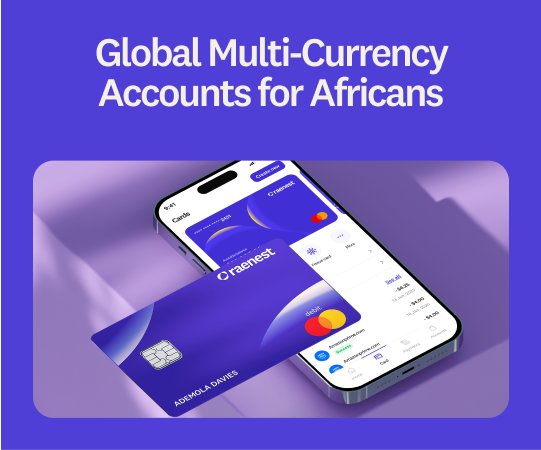
If you mainly use Quidax to receive USDT or USDC from clients and turn it into money you can use, Raenest is a good Quidax alternative for Nigerians. You can receive, hold, send, spend, convert and grow your stablecoins in one app, without trading or P2P.
Create dedicated USDC and USDT wallets, receive on Ethereum, Tron, Solana, Polygon and BNB Smart Chain, and hold your stablecoins as they are. When you need to move them, send USDC and USDT to any external wallet on supported networks, or convert to USD, GBP, EUR or NGN without P2P in a few taps. You can also spend your stablecoin balance directly with the Raenest card anywhere Visa is accepted, with no card funding fees.
If your stablecoins are sitting idle, Stablecoin Vault lets you earn up to 7% variable APY on USDC and USDT, paid daily, with no lock-up. The minimum deposit is $100.
Fees: Conversions between USD and USDC/USDT cost 0.50%. Conversions between stablecoins and other currencies, including NGN, cost 0.70%. Sending stablecoins to an external wallet costs $2 + 0.3% (percentage capped at $5), plus network fees.
Pros:
- Stablecoins, naira, dollar, pound and euro balances in one app
- Send USDC and USDT to external wallets on Ethereum, BNB Smart Chain, Solana and Polygon
- Spend USDC and USDT directly with your card
- Earn yield on idle stablecoins
- Also receive Upwork payouts, invoice clients and buy US stocks in the same app
Cons:
- Supports USDC and USDT only, so you can't buy or trade Bitcoin or other coins
- Vault yield is variable and not guaranteed
Best for: Freelancers, remote workers and businesses who get paid in stablecoins and want to hold, spend or convert them easily. Create a Raenest account.
2. Busha: for buying and selling crypto with naira
Busha is a Nigerian crypto exchange with SEC Approval-in-Principle since August 2024. It supports naira deposits and withdrawals and lists around 70 coins, including the naira stablecoin cNGN.
Pros: SEC Approval-in-Principle, naira bank deposits and withdrawals.
Cons: Around 70 coins, compared with hundreds on global exchanges like KuCoin. Check fees in-app before trading.
Best for: Nigerians who mainly buy and sell crypto with naira.
3. Luno: for first-time buyers
Luno is a global crypto exchange whose Nigerian entity was admitted to ARIP on 2 July 2026. It supports naira deposits and withdrawals and focuses on major coins like Bitcoin and Ethereum.
Pros: Simple app, SEC Approval-in-Principle.
Cons: Instant buy/sell spreads are wider than the order book; smaller coin list.
Best for: First-time buyers and anyone setting up crypto for a family member.
4. KuCoin: for experienced traders
KuCoin is a global exchange whose Nigerian entity joined ARIP in July 2026. It lists hundreds of coins, which suits active traders more than everyday users.
Pros: Large coin selection and advanced trading tools.
Cons: The Nigerian operation is new; confirm naira funding options in your account first.
Best for: Active traders who want more coins than Quidax offers.
5. Yellow Card: for cross-border stablecoin payments
Yellow Card focuses on stablecoin payments across several African countries rather than trading. Its Nigerian entity was admitted to ARIP in August 2026.
Pros: Coverage across several African countries.
Cons: Not built for trading a wide range of coins.
Best for: People and businesses sending stablecoins across African borders.
What to look for in a Quidax alternative
Before you switch, decide what you actually need the platform to do. These are the five things that matter most in Nigeria right now.
1. Regulatory standing. Under the Investments and Securities Act 2025, crypto platforms serving Nigerians fall under the SEC. Most local exchanges hold an Approval-in-Principle (AIP) under the SEC's Accelerated Regulatory Incubation Programme (ARIP). The SEC is clear that an AIP is not a final licence, so check the SEC's own circulars rather than a platform's homepage.
2. A clean naira on- and off-ramp. Direct bank deposits and withdrawals are safer than P2P. P2P trades can leave your bank account frozen if a counterparty's funds are later flagged.
3. Real cost, not just the trading fee. Look at spreads, conversion fees and withdrawal fees together. Since mid-2026, naira-to-crypto conversions on Nigerian platforms also attract stamp duty and withholding tax, so fewer, larger conversions usually cost less.
4. The assets you actually use. A trader needs hundreds of coins. A freelancer paid in USDT or USDC may only need two stablecoins and a fast way to spend or withdraw them.
5. Support and security. Two-factor authentication, clear KYC, and a support team you can reach in Nigeria when something goes wrong.
How to choose the right Quidax alternative
Start with how you actually use crypto, not with which app is most popular.
If you're a freelancer or remote worker paid in USDT or USDC, you probably don't need an exchange at all. A platform like Raenest lets you receive stablecoins, hold them, spend them with a card, earn yield on them, or convert to naira when you're ready, all in the same app you use for your dollar, pound and euro payments.
If you buy and sell Bitcoin or other coins with naira, stick with an SEC-approved local exchange such as Busha or Luno, so your deposits and withdrawals go through proper bank rails.
If you're an active trader, KuCoin has a larger coin list and a Nigerian entity behind it.
Whatever you choose, check the platform's status on the SEC's circulars page and avoid keeping more on any single platform than you can afford to have frozen.
Frequently asked questions
1. What is a good alternative to Quidax in Nigeria?
It depends on what you use Quidax for. If you mainly receive USDT or USDC as payment, Raenest is a good Quidax alternative for Nigerians: you can receive, hold, send, spend, convert and earn yield on your stablecoins in one app. If you buy and sell other coins, SEC-approved exchanges like Busha and Luno are options.
2. Can I send USDT or USDC from Raenest to another wallet?
Yes. In the app, tap Send Money, choose Stablecoin, pick USDC or USDT and the network, then enter the wallet address. Supported networks include Ethereum, BNB Smart Chain, Solana and Polygon. Each send costs $2 + 0.3% (percentage capped at $5), plus the network fee.
3. Can I spend USDT or USDC with a card in Nigeria?
Yes. With the Raenest card, you can spend directly from your USDC or USDT balance anywhere Visa is accepted, online and in-store. You don't need to convert first, and there are no card funding fees.
4. Can I earn interest on my USDT and USDC?
Yes. Raenest's Stablecoin Vault lets eligible users earn up to 7% variable APY on USDC and USDT. Earnings are added daily, there's no lock-up, and the minimum deposit is $100. The rate is variable and not guaranteed.
5. Can I receive USDT or USDC on Raenest?
Yes. You can create dedicated USDT and USDC wallets on Raenest and receive on Ethereum, Tron, Solana, Polygon and BNB Smart Chain. You can then hold, spend, send, convert or earn yield on your balance.
6. What's the cheapest way to convert USDT to naira?
Compare the full cost: spread, conversion fee, withdrawal fee and taxes. Converting fewer, larger amounts usually costs less than many small conversions. On Raenest, converting stablecoins to NGN costs 0.70%, and the fee shows before you confirm.
Conclusion
Quidax is one option, but Nigerians now have more choices for managing crypto and stablecoins. If you mainly trade coins, other SEC-approved exchanges are worth comparing.
But if crypto for you is really about getting paid, in USDT or USDC from clients abroad, you don't need to trade at all. With Raenest, you can receive stablecoins, hold them in dedicated wallets, spend them with your card, earn up to 7% variable APY in Stablecoin Vault, and convert to naira, dollars, pounds or euros without P2P whenever you're ready.
Create your Raenest account and bring your stablecoins and the rest of your global money into one place.
This article is for information only and is not financial advice. Crypto and stablecoins carry risk; APY is variable and not guaranteed.